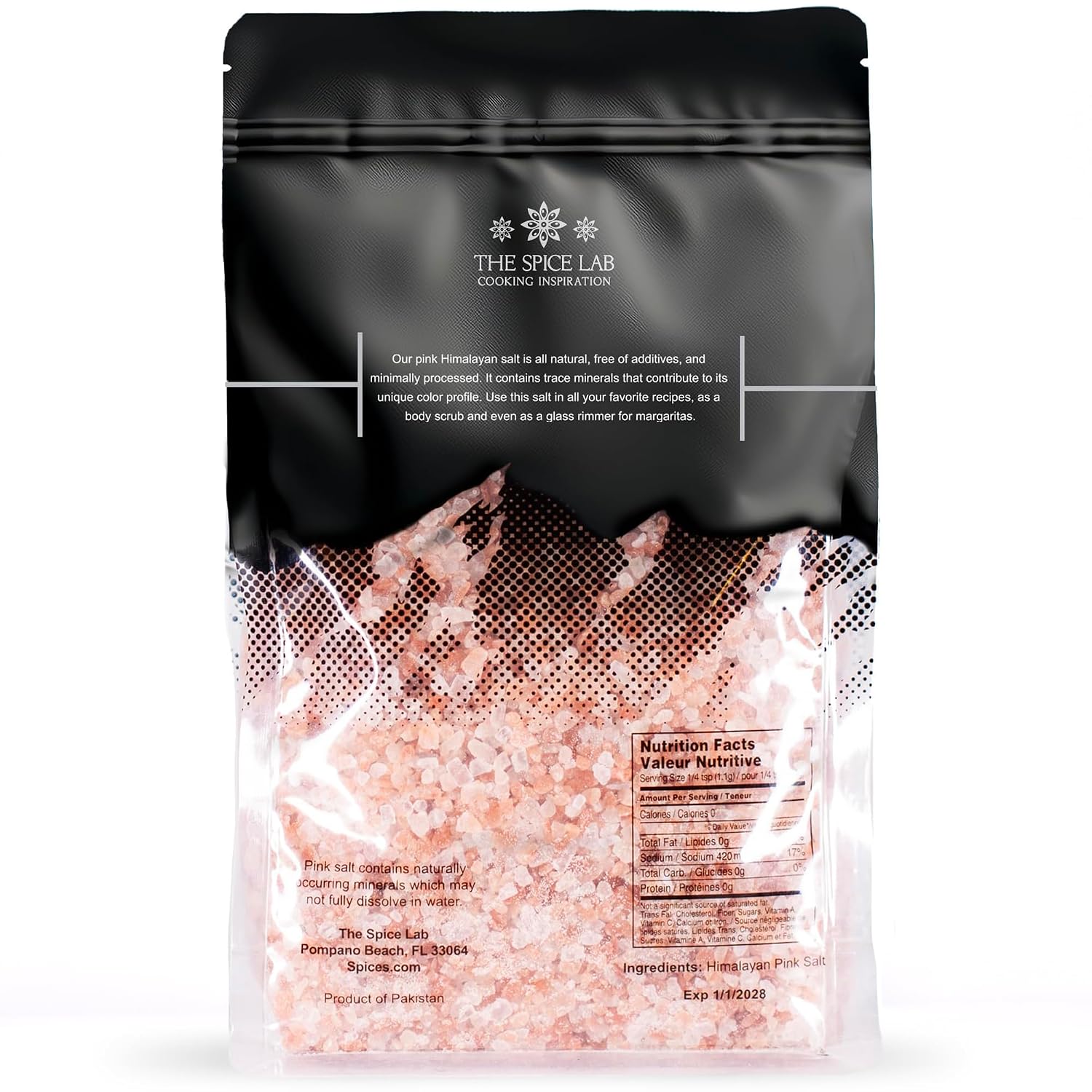
If you’ve ever stood in a grocery store staring at a bag of rosy-pink salt and wondered whether you were looking at a genuine culinary upgrade or an elaborate piece of marketing, you’re not alone — and you’re asking exactly the right question. Himalayan pink salt (sometimes labeled “Himalayan rock salt” or “pink mineral salt”) is mined from the Khewra Salt Mine in Pakistan, one of the world’s oldest and largest salt deposits. The pink color comes from trace amounts of iron oxide — essentially the same compound that makes rust red — along with a small mix of other minerals locked inside what is technically ancient, dried-up seabed. The big promise on most packaging is that those minerals make it healthier and more flavorful than ordinary table salt. This article is going to show you, plainly and honestly, which parts of that promise hold up and which parts are noise — and then help you decide whether Himalayan pink salt actually belongs in your salt pantry, and if so, where.
The Mineral Claims: Real, But Almost Irrelevant at Table Quantities
Let’s start with the claim you’ll see most often: Himalayan pink salt contains over 80 trace minerals, including magnesium, potassium, calcium, and iron. That part is technically true. Smithsonian Magazine’s feature on Himalayan salt notes that independent lab analyses do confirm the presence of these minerals. The problem is what the numbers actually look like.
Himalayan pink salt is approximately 98% sodium chloride — the same compound that makes up regular table salt. The remaining 2% is where all 80+ trace minerals live. When you season a dish or finish a steak, you’re using somewhere between half a teaspoon and a teaspoon of salt total. The mineral content of that quantity is nutritionally negligible. Healthline’s editorial overview of pink Himalayan salt puts it directly: “You would need to consume large — and unsafe — amounts of pink Himalayan salt to get meaningful quantities of the extra minerals.” The FDA’s consumer guidance on sodium makes the same implicit point from the other direction: the health risks of excess sodium consumption far outweigh any speculative benefit from trace mineral variation between salt types.
The short version: the minerals are real. The health benefit is not meaningfully real at cooking quantities. If you’re buying Himalayan pink salt because you believe it will meaningfully improve your magnesium intake or “balance your pH,” the evidence does not support that decision. If you’re buying it for other reasons — texture, aesthetics, flavor — there’s a more honest conversation to be had.
By the numbers:
- Sodium chloride content of Himalayan pink salt: ~98%
- Sodium chloride content of standard table salt: ~97–99%
- Mineral difference per teaspoon (roughly 6g of salt): fractions of a milligram for most trace minerals
- Price range at retail (2026): $0.30–$1.50 per ounce, versus $0.05–$0.15 per ounce for iodized table salt
Where Himalayan Pink Salt Actually Has Merit
Here’s where the honest assessment gets more interesting, because dismissing Himalayan pink salt entirely misses some genuinely useful properties.
Texture and grind flexibility. Himalayan pink salt is most widely sold as a coarse rock salt or as a fine-ground version. The coarse rock form has a hardness and density that makes it excellent for salt blocks (thick slabs used for serving chilled dishes or, in some applications, mild heat cooking) and for filling grinder mills. Serious Eats’ ingredient explainer on salt notes that crystal structure and grind size affect how salt hits the palate — larger, irregular crystals dissolve more slowly and create distinct pops of salinity rather than uniform background salt. Coarse Himalayan pink in a grinder gives you reasonable control over that texture on demand.
Cooking salt value proposition. For seasoning pasta water, brining poultry, or building a salt crust for a roasted beet or a whole fish, Himalayan pink works perfectly well. Tasting Table’s comparison of Himalayan pink versus sea salt concludes that in applications where salt fully dissolves into a dish — brines, boiling water, doughs, sauces — there is no perceptible flavor or texture difference between Himalayan pink and a quality sea salt at similar grind sizes. This matters for your pantry economics: if you’re already buying Maldon or Fleur de Sel for finishing, you don’t need a premium finishing salt doing bulk cooking work. A large bag of coarse Himalayan pink at $0.40–$0.60 per ounce is a legitimate, cost-sensible choice for high-volume salt work.
Aesthetics in presentation contexts. This is not a trivial consideration. A bowl of coarse pink crystals on a dinner table or a salt cellar filled with rosy grains reads as considered and intentional without the price tag of a true artisan finishing salt. For caterers and private-dining professionals, Himalayan pink on the table at a price point that allows replacement without anxiety is a real operational advantage. Cook’s Illustrated’ finishing salt taste-test found that diners’ perception of food quality increased when visually distinctive salts were present, even before tasting — presentation shapes expectation.
Where Himalayan Pink Salt Falls Short (And What to Buy Instead)
This is the tradeoff section, and if you’re actively building a salt pantry, these distinctions matter.
It’s a mediocre finishing salt. Finishing salt — the pinch you add at the very end, directly onto food before it hits the table — works because of crystal structure. Maldon’s signature flake (a pyramid-shaped crystal) shatters between your fingers, dissolves in layers on the tongue, and delivers brightness without overwhelming salinity. Fleur de Sel de Guérande has a delicate, moist crystal and a complex oceanic flavor from residual minerals that are actually tasted because they’re on the surface of the food, not dissolved into it. Himalayan pink rock salt, by contrast, is dense, chunky, and slow to dissolve — it can sit on a piece of fish and still feel gritty halfway through the bite. The pink color is pretty, but the eating experience doesn’t justify choosing it over Maldon or Fleur de Sel for finishing work. Tasting Table’s side-by-side notes that tasters consistently preferred flake sea salts over Himalayan pink for raw and lightly dressed applications.
The iodine gap matters if you rely on salt for iodine. Standard iodized table salt is deliberately fortified with iodine, a nutrient most people in the developed world get largely through salt. Himalayan pink salt contains only trace, naturally occurring iodine — far below the fortified level. The FDA’s sodium guidance notes that iodine deficiency, while less common than it once was, remains a concern for people whose diets lack seafood and dairy. If you’re moving away from iodized table salt entirely, this is worth factoring in.
It is not a rare or artisan product. This is the clearest message for the collector-tier reader: Himalayan pink salt is one of the most abundant mined salts on the planet. The Khewra deposit is estimated to contain hundreds of millions of tons. There is no harvest story, no seasonal variation, no small-batch provenance. You’re buying a commodity product that has been effectively marketed. Comparing it to Hana Flake Hawaiian sea salt — harvested in small batches from Pacific brine, hand-raked, and genuinely limited in supply — or to Saltverk’s geothermal-harvested Icelandic flakes reveals the gap immediately. Those products carry a real story and real scarcity. Himalayan pink carries a geological timeline and a wellness narrative.
The Decision Framework: If X, Then Y
Here’s how to think about whether Himalayan pink salt earns a place in your pantry right now.
If you need a bulk cooking salt and want something more interesting than iodized table salt — buy coarse Himalayan pink in a large format (1–5 lb bags are widely available at $6–$18 depending on brand). It does the job, the price is right, and the aesthetics in a grinder or cellar are genuinely appealing. This is the legitimate use case.
If you’re looking for a finishing salt that performs — buy Maldon flakes for everyday use ($8–$12) or Fleur de Sel de Guérande for seafood and delicate applications ($18–$28). Himalayan pink will not give you the crystal experience these deliver. Spend the money where it shows up in flavor.
If someone is selling you Himalayan pink salt at premium finishing-salt prices ($20+) and citing the mineral content as justification — that’s a marketing premium, not a culinary one. The minerals don’t perform at table quantities. Price it like a bulk salt; don’t pay finishing-salt prices for it.
If you’re a caterer or private-dining professional sourcing for table presentation — Himalayan pink in a handsome salt cellar is a perfectly defensible choice for the table setting, and the operational cost is low enough that you won’t wince when guests over-pinch. Reserve your artisan finishing salt budget for the plate itself: the flake on the sliced steak, the Fleur de Sel on the crudo.
If you’re building a gift set or curating a tasting collection — Himalayan pink salt is the filler, not the feature. It’s fine as a utility salt in a multi-salt gift box, but don’t position it as a showpiece next to a limited-harvest tin or a smoked specialty salt. The story isn’t there.
The Bottom Line
Himalayan pink salt is a competent, affordable, visually appealing bulk salt with a marketing story that has outrun its actual culinary credentials. The mineral claims are technically real and practically irrelevant. The flavor is clean and neutral — which is fine for cooking applications where salt is a background player, and limiting for finishing applications where texture and complexity matter. At the right price point and in the right role, it earns its shelf space. The mistake is paying finishing-salt prices for it, or expecting it to deliver what a genuinely artisan salt can.
Build your pantry clearly: Himalayan pink in the grinder or the brine bucket, and something with a real harvest story on the rim of the plate. That’s the honest version of what this salt is, and it’s actually a useful one.