If you’ve recently moved on from the basic iodized salt that comes in the blue cardboard cylinder, you’ve probably noticed that the salt world is — unexpectedly — enormous. There are flaky pyramid crystals harvested by hand in England, grey-damp salts raked from ancient ponds in France, and smoked varieties that carry the scent of birch forests. It can feel overwhelming fast. Here’s the reassuring truth: you don’t need twenty salts. You need four, chosen for specific jobs, and once those four are on your shelf you’ll have coverage for nearly every cooking situation — from boiling pasta water to finishing a sliced dry-aged ribeye. “Finishing salt,” by the way, just means a salt you add at the end of cooking (or at the table), so you can taste and feel its texture before heat dissolves it away. A “cooking salt” is what goes into the water, the dough, the brine. Those two categories are the backbone of everything that follows.
Why Four Salts? The Logic Behind the System
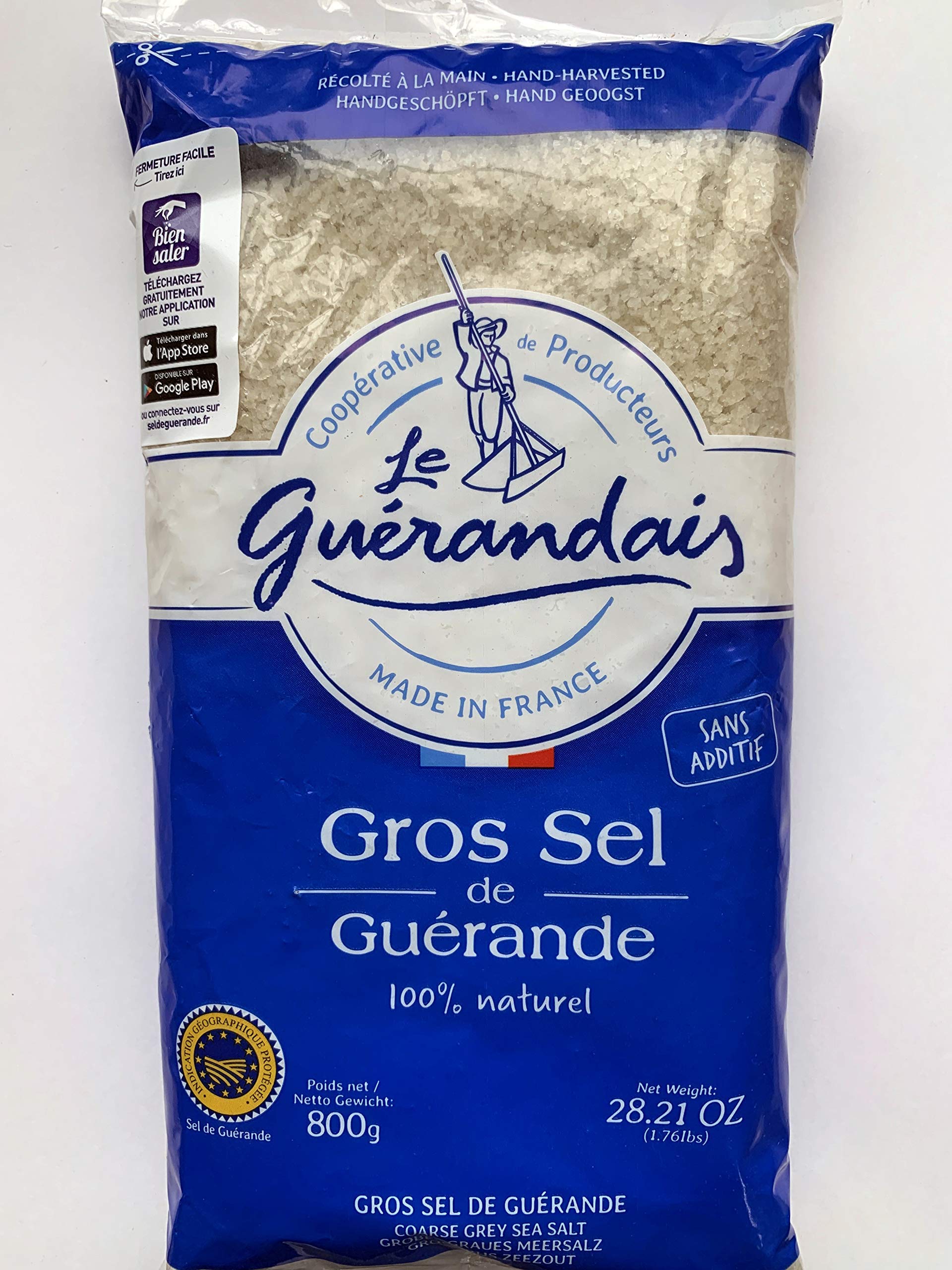
One salt pantry, one problem: every salt makes tradeoffs. A fine-grain kosher salt dissolves fast and seasons evenly, which makes it excellent for cooking — but it has no visual impact and contributes nothing textural when sprinkled on a finished dish. A gorgeous Maldon flake (the pyramid-shaped English sea salt that’s become the default finishing salt for home cooks who’ve done any reading on the subject) would be extravagant and impractical to use by the fistful in your pasta water. A mineral-rich grey salt — like the famous Sel Gris de Guérande, harvested from clay-lined tidal ponds in Brittany — brings a complexity that shines on bread and butter or grilled vegetables but would be wasted dissolved into a soup.
The four-salt system is about matching crystal structure, moisture content, mineral profile, and price-per-gram to the actual job you’re asking the salt to do. Samin Nosrat’s foundational book Salt Fat Acid Heat makes the case clearly: the single biggest lever most home cooks can pull to improve their food is using more salt at the right stage of cooking, with the right salt for that stage. Cook’s Illustrated’s guide to finishing salts builds on that point, noting that crystal geometry is the primary driver of perceived salinity on the palate — a large flake delivers a brief, bright punch because it dissolves slowly on the tongue, while a fine grain distributes itself evenly and registers as background seasoning. Both are correct — for different moments.
Here’s the framework at a glance:
| Slot | Salt Type | Primary Job | Typical Price Range |
|---|---|---|---|
| 1 | Fine-grain kosher or sea salt | All cooking, brining, baking | $4–$10 / lb |
| 2 | Everyday finishing flake (e.g., Maldon) | Meat, eggs, salads, toast | $8–$14 / 8.5 oz |
| 3 | Delicate mineral finishing salt (e.g., Fleur de Sel) | Seafood, raw applications, chocolate | $18–$28 / 3.5 oz |
| 4 | Smoked or specialty finishing salt | Grilled proteins, charcuterie, party dishes | $22–$45 / 3–4 oz |
Slot One: Your Workhorse Cooking Salt
This is the salt you should be almost reckless with — in your pasta water (it should taste like the sea, not like medicine), rubbed into chicken before it goes into the refrigerator overnight, dissolved into pickling brine, and incorporated into bread dough. The job here is seasoning through, not on top of.
The main decision is between Diamond Crystal Kosher Salt and Morton Kosher Salt — and this is a decision worth making deliberately, because their crystal densities differ enough that a recipe written for one will be undersalted or oversalted by roughly 50% if you use the other. Per Serious Eats’ detailed breakdown of the science behind salt types, Diamond Crystal’s large, hollow flakes weigh about half as much per teaspoon as Morton’s denser, compressed crystals. Most published recipes in American cookbooks — including those developed in professional test kitchens — are calibrated to Diamond Crystal. If you’re switching from Morton, use about half the volume the recipe calls for until your palate recalibrates.
If you prefer a sea salt in this slot, fine-grain Jacobsen Pure Flake Kosher Sea Salt works well and brings a cleaner mineral finish than either kosher brand — it’s worth the modest price premium if you do a lot of cooking where the background salt flavor is perceptible (light soups, delicate grains, mild fish). Budget: keep this slot under $12 per pound. You’ll go through it fast.
Slot Two: Your Everyday Finishing Flake
This is the salt most readers will reach for twenty times a week. You use it on scrambled eggs, on the avocado toast everyone pretends they’ve transcended, on a sliced tomato with olive oil, on a pork chop out of the cast iron, on the rim of a margarita glass. It needs to be beautiful enough to matter and affordable enough to use freely.
Maldon Sea Salt Flakes — harvested in Essex, England — have earned their ubiquity. The pyramid-shaped crystals are a result of the brand’s slow-evaporation pan process; they shatter pleasantly under slight pressure and deliver salinity in a distinct, front-of-palate burst. At roughly $8–$12 for an 8.5-ounce box (pricing observed across The Meadow, Williams Sonoma, and major online retailers as of early 2026), Maldon sits at a price point where you won’t feel guilty sprinkling generously. Saveur’s field guide to finishing salts calls Maldon “the workhorse of professional garnishing” — and that reputation is earned, not marketed.
The alternative worth knowing: Halen Môn Pure Sea Salt from Wales, which commands a slight premium ($14–$18 for a similar quantity) and has a finer, more uniform flake with a slightly softer mineral edge. Reviewers who’ve compared them head-to-head on culinary forums and in aggregated purchase reviews tend to describe Halen Môn as “cleaner” and Maldon as “brighter.” If your cooking skews toward delicate vegetables, poached eggs, and lighter preparations, Halen Môn is the more elegant everyday choice. If you grill frequently and want maximum visual drama on dark proteins, Maldon’s larger pyramids photograph better and deliver more textural pop.
If X, then Y: If you cook five or more dinners per week at home and want one finishing salt that handles everything without making you think, start with Maldon. If you already own Maldon and feel like your finishing is slightly one-note, upgrade this slot to Halen Môn for two weeks and notice whether the difference justifies the price delta for your palate and your cooking style.
Slot Three: Your Delicate Mineral Salt
This slot is for applications where the salt is genuinely the flavor — not just seasoning, but an ingredient. Think of a piece of barely-seared diver scallop, a ripe melon with prosciutto, a simple green salad dressed only in good olive oil, or a square of 72% dark chocolate. In these contexts, you want a salt that brings mineral complexity — often described as briney, oceanic, or subtly sweet — without the assertive crunch of Maldon.
Fleur de Sel de Guérande is the canonical choice, and the reason is provenance, not marketing. This salt forms as a thin, fragile crust on the surface of the Guérande marshes in Brittany on warm, calm summer days, and it’s harvested by hand within hours of forming. The Meadow’s salt buying guide describes it as “the most perishable and prized of the sea salts” because the conditions for its formation are narrow and unpredictable. The moisture content is higher than most finishing salts, which gives it a softer, more dissolving texture on the tongue and a distinctly oceanic mineral complexity. Prices run $18–$28 for a 3.5-ounce tin depending on source and vintage.
The honest tradeoff: Fleur de Sel is expensive per ounce, slightly damp (so it clumps in humid kitchens), and genuinely wasted on anything cooked at high heat. If you’d use it on a grilled steak, you’re paying a premium for texture and minerals that a hot pan will eliminate. Use it cold or on barely-warm dishes. Pinch it between your fingers rather than shaking it.
If X, then Y: If your cooking includes raw preparations, chilled seafood, cheese boards, or desserts that benefit from a salt-sweet contrast, Fleur de Sel is the right investment for Slot Three. If you mostly cook heartier, higher-heat food and your primary interest is finishing steak and roasted vegetables, skip Fleur de Sel for now and put that budget into Slot Four.
Slot Four: Your Specialty or Smoked Salt
The fourth slot is where your pantry earns its personality. It’s not mandatory — you can cook beautifully with three salts — but a specialty finishing salt opens up a category of applications where no other salt substitutes: anything that benefits from smoke, char, or an unusual mineral signature.
Saltverk Birch Smoked Flaky Salt from Iceland has become a genuine standout in this category. Saltverk uses geothermal energy to evaporate seawater from the Reykjanes Peninsula, then cold-smokes the resulting flakes over Icelandic birch. The result is a salt with a clean, cool smoke character — less aggressive than hickory or applewood, with a finish that complements lamb, salmon, root vegetables, and butter without overwhelming them. It runs $28–$45 for a 3–4 ounce tin depending on retailer. The story travels well if you’re using it at a dinner party; the provenance is genuinely interesting and the tin is shelf-beautiful.
If smoked salt doesn’t speak to your cooking, consider Jacobsen Salt Co.’s infused salts (habanero, pinot noir, umami) as the personality layer in Slot Four — particularly useful if you entertain frequently or want to give salt as a gift. The Jacobsen range runs $22–$38 per tin and is calibrated for home-cook applications rather than professional-level intensity.
If X, then Y: If you grill or smoke proteins regularly, or if you cook a lot of salmon and lamb, Saltverk Birch Smoked is the right Slot Four salt — it earns its place every week. If you entertain more than you grill and want a salt that surprises guests and doubles as a gift, the Jacobsen infused line is the more versatile investment.
The Decision Rule That Ties It Together
Here’s the honest summary: if you can only buy two salts today, buy a fine-grain kosher for cooking and Maldon for finishing. That two-salt system covers 90% of what you’ll cook, and it’s a meaningful upgrade over a single all-purpose salt. Add Fleur de Sel when your cooking moves toward seafood, raw applications, or desserts. Add a smoked or specialty salt when your entertaining or grilling makes it earn its counter space.
The four-salt system isn’t about owning more; it’s about removing the decision from the moment. When you pull out the protein, you already know which salt goes on it. When the eggs hit the plate, your hand goes to the Maldon without deliberation. That automatic, calibrated reach is the whole point — and it’s available to any cook who’s willing to stock four small containers instead of one big cylinder.